26 Jun 2026
Inside the Mechanics of Continuous Shuffle Systems and Their Influence on Strategic Adjustments
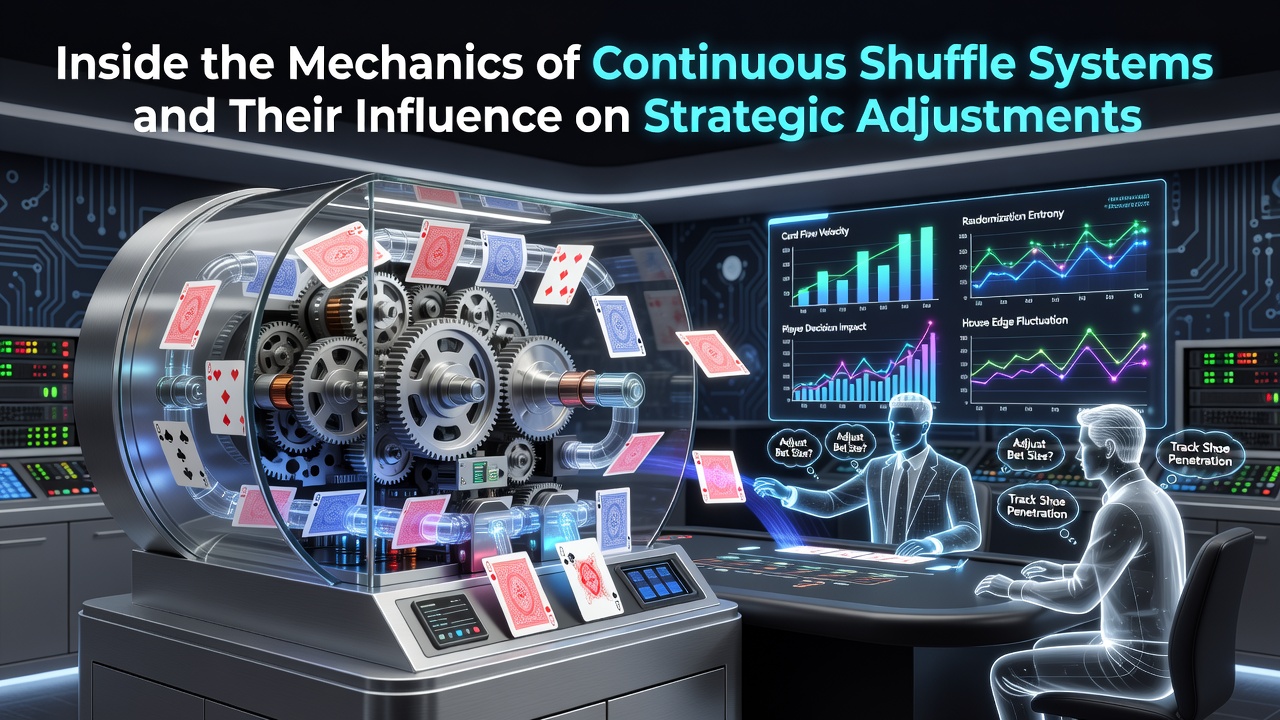 Continuous shuffle systems operate by drawing cards from a shoe, processing them through an internal mechanism after each hand, and returning them to the active deck almost immediately. This process eliminates the traditional pause for manual reshuffling and keeps the number of cards in play relatively stable throughout a session. Observers note that these machines rely on a combination of rollers, sensors, and randomizing chambers to integrate discarded cards back into circulation without human intervention.
How Continuous Shuffle Systems Function in Practice
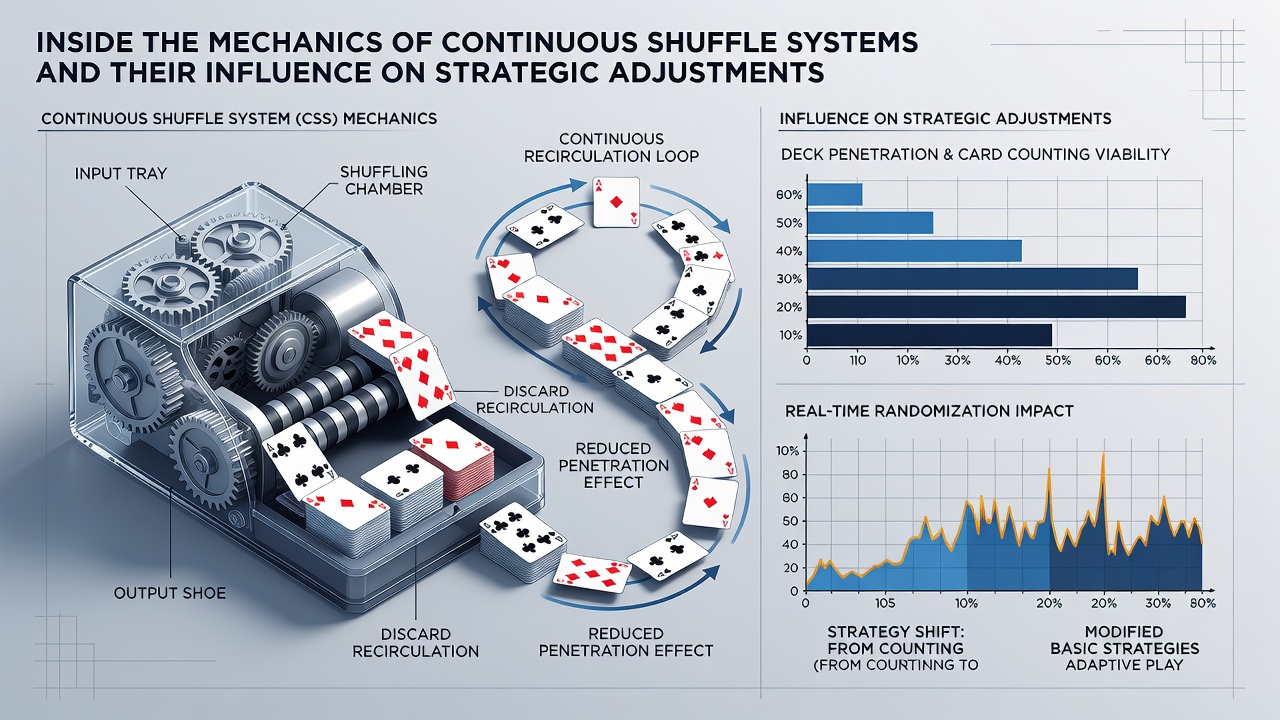
The core design incorporates a hopper that accepts played cards, a shuffling wheel or belt system that mixes them with the remaining undealt cards, and an output tray that feeds the refreshed deck back to the dealer. Sensors verify card integrity and count totals to prevent errors, while the randomization algorithms ensure no predictable sequence emerges. Data from regulatory testing shows these units typically maintain between 50 and 70 percent of the full deck in active play at any moment, depending on the model and table limits.
Technicians calibrate the systems according to jurisdiction-specific standards, and operators perform daily integrity checks that include cycle counts and sensor calibration. In June 2026 several North American properties reported upgraded firmware versions that further reduced any detectable bias in card distribution patterns, according to internal compliance logs shared with oversight bodies.
Comparison With Traditional Multi-Deck Shuffling
Traditional procedures remove cards after each round until a cut card appears, at which point the dealer stops play and reshuffles the entire shoe. Continuous systems bypass this step entirely, which shortens downtime but alters the statistical landscape players encounter. Research conducted by the University of Nevada's gaming research division indicates that the constant mixing prevents the deck from reaching deep penetration levels commonly associated with higher-variance outcomes in manual-shuffle environments.
Impact on Card Counting and Strategic Play
Card counters traditionally track high and low cards as they leave the shoe to calculate remaining composition and adjust bets accordingly. Because continuous shuffle systems return cards almost instantly, the running count resets repeatedly and never builds the same depth of information. Analysts at the Canadian Institute for Gaming Research documented that effective counting windows shrink dramatically, often to fewer than ten cards of meaningful deviation before mixing occurs again.
Players who previously relied on true-count conversions must therefore recalibrate their decision matrices. Basic strategy remains unchanged, yet bet-spread decisions require tighter triggers and smaller increments to compensate for the reduced edge. Some table minimums have increased at properties using these machines, reflecting the altered risk profile operators observe in session data.
Regulatory Oversight and Technical Standards
Gaming control authorities require independent laboratory certification before any continuous shuffle model reaches the casino floor. The Nevada Gaming Control Board maintains a published list of approved devices and mandates quarterly field audits that sample randomization output against expected statistical distributions. Similar protocols exist in Australian jurisdictions, where the New South Wales Independent Liquor and Gaming Authority applies comparable testing intervals and publishes summary compliance rates annually.
Operators must also log any detected malfunctions and submit incident reports within strict timeframes. These records feed into broader industry databases that help identify patterns across multiple venues and machine generations.
Player Adaptation Patterns Observed in the Field
Surveillance summaries and player tracking systems reveal that individuals accustomed to traditional games often migrate toward tables without continuous shuffle units when those options remain available. Others adjust by shortening session length or narrowing their bet spreads to align with the compressed information window. Training programs offered through dealer schools now include modules that teach staff how to explain machine functions to guests who inquire about game pace.
One documented case at a Midwest riverboat property showed a measurable shift in table occupancy after installation of new units; occupancy stabilized once management added signage clarifying that rules and payouts stayed identical despite the mechanical change.
Conclusion
Continuous shuffle systems streamline operations while reshaping the informational environment that strategic players navigate. Their mechanical integration of cards limits penetration depth, compresses counting windows, and prompts measurable adjustments in betting behavior. Regulatory frameworks across multiple regions enforce consistent testing and reporting, ensuring that technical performance aligns with jurisdictional expectations. As more properties adopt updated models, the interplay between machine design and player strategy continues to evolve within established oversight structures.