5 Jun 2026
How Lighting Designs in Blackjack Areas Affect Visibility and Player Performance Metrics
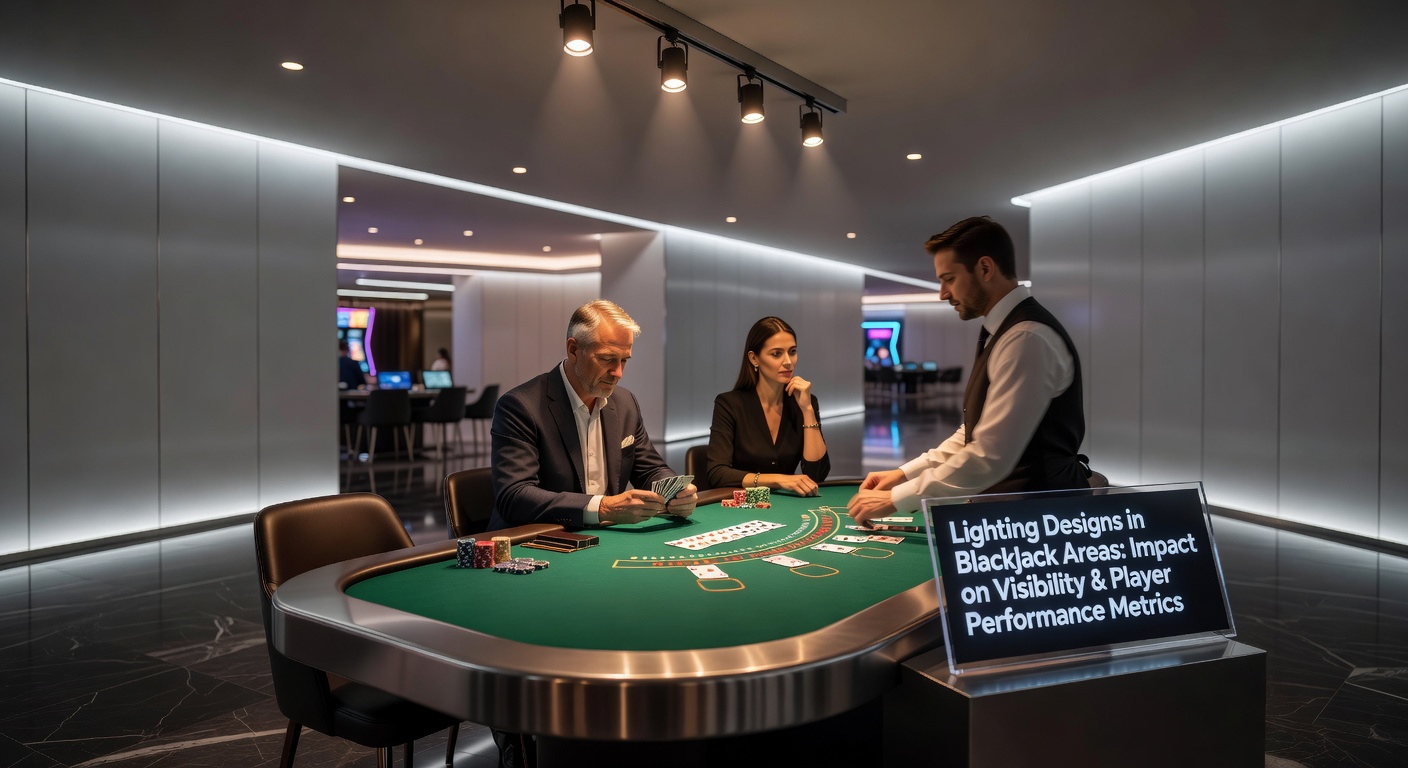
Lighting designs in blackjack areas combine overhead fixtures, table-specific LEDs, and ambient controls that shape how clearly players and dealers read cards, track bets, and execute decisions during each round, while data from multiple jurisdictions tracks corresponding shifts in performance metrics such as average decision time, error frequency, and table hold percentages.
Casino operators adjust these systems according to standards set by regulatory bodies including the Nevada Gaming Control Board, which outlines minimum illumination levels for table games to maintain security and fairness; similar guidelines appear in reports from the Australian Institute of Criminology that examine how environmental factors influence gameplay across regulated venues.
Core Elements of Blackjack Lighting Systems
Table-level lighting typically employs directional LEDs positioned above felt surfaces to reduce glare on card faces while preserving color accuracy for suits and ranks, and these setups often integrate dimming controls that operators adjust during peak hours versus slower periods to balance energy use with operational needs. Observers note that many properties now combine warm white ambient layers with cooler task lighting, creating layered environments where background areas remain subdued yet central playing zones stay evenly lit, and this layering stems from engineering studies that measure lux values at player eye level and dealer hand positions.
Research conducted at university-affiliated gaming labs indicates that consistent illumination between 200 and 300 lux at the table surface correlates with faster card recognition times compared to uneven or lower-light conditions, while data collected through surveillance analytics shows measurable differences in misread rates when lighting drifts outside those ranges. Facilities that upgraded to tunable LED arrays in recent years report streamlined maintenance because individual fixtures can be recalibrated remotely rather than requiring full bulb replacements.
Visibility Factors and Their Measured Effects
Card visibility depends on both light intensity and spectral quality, since certain LED color temperatures enhance contrast on standard playing cards while others introduce subtle tinting that can slow identification during rapid dealing sequences; performance tracking software used by casino analytics teams captures these patterns through timestamped decision logs that compare play speed across differently lit sections of the same floor. Those who monitor table games observe that players seated under direct overhead spots tend to lean forward less frequently to examine cards, reducing minor posture-related fatigue over extended sessions, whereas peripheral tables with softer side lighting sometimes record higher rates of dealer clarifications for ambiguous calls.
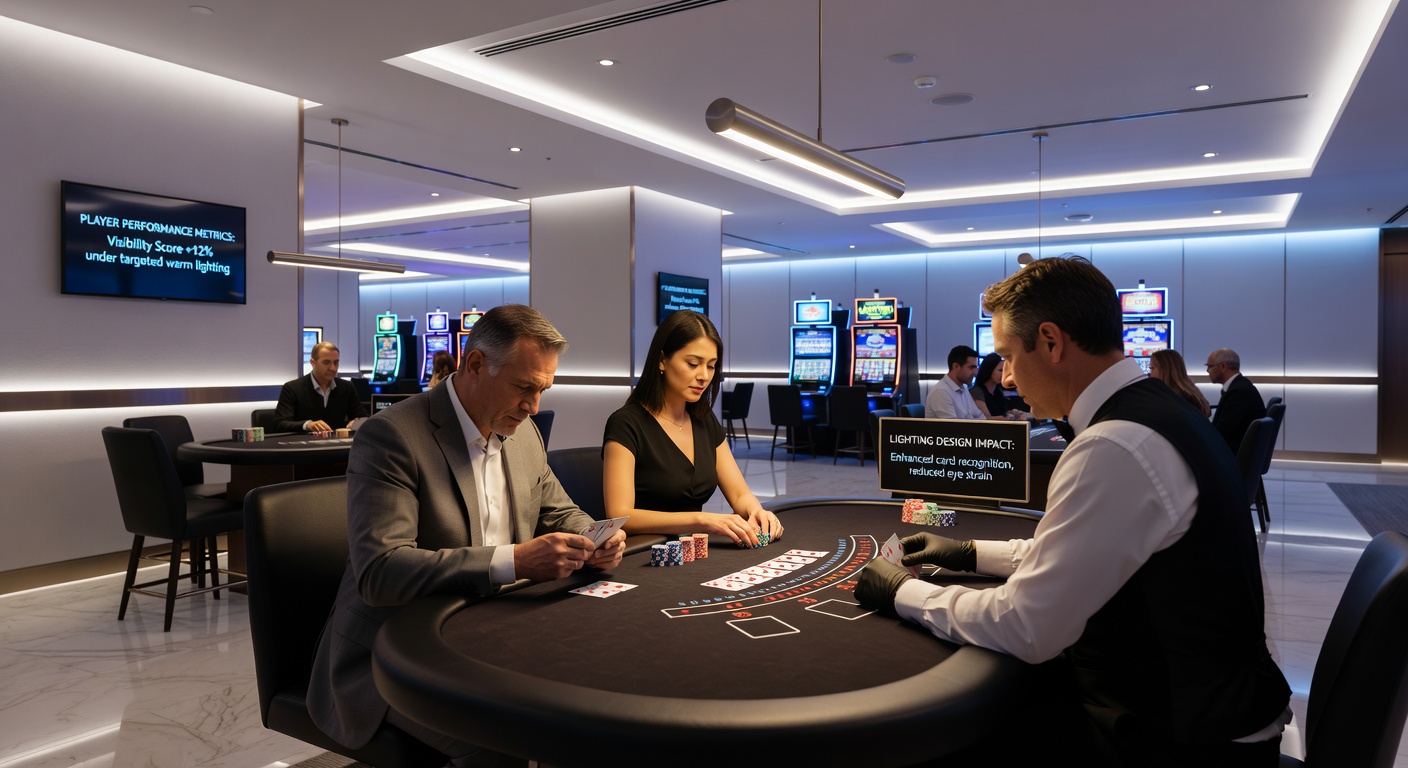
Glare from reflective chip surfaces or polished railings can create momentary blind spots for both participants and surveillance cameras, prompting designers to incorporate matte finishes and angled light sources that minimize specular reflections without sacrificing overall brightness. As of June 2026, several properties in major markets completed retrofits that replaced older fluorescent banks with full-spectrum LEDs after internal reviews linked prior systems to elevated dispute resolution times during evening shifts.
Performance Metrics and Data Patterns
Quantitative studies compiled by regional gaming authorities document correlations between lighting consistency and metrics such as hands per hour, player error incidence, and average bet resolution speed, with tables operating under standardized illumination showing tighter clustering around baseline performance figures. Analysts cross-reference these outcomes against occupancy data to isolate lighting as one variable among others like dealer speed and game rules, revealing that abrupt changes in fixture output during maintenance windows occasionally coincide with temporary spikes in player hesitation at affected stations.
Equipment manufacturers supply calibration reports that tie specific lux distributions to reduced variance in dealer payout accuracy, and facilities adopting these recommendations often integrate the data into broader operational dashboards that also track energy consumption and bulb lifespan. External audits performed under frameworks from bodies like the Canadian Gaming Association further validate that uniform lighting contributes to smoother regulatory compliance checks because visual evidence from cameras remains clearer across all recorded angles.
Implementation Trends Across Jurisdictions
Operators in different regions adapt lighting strategies to local climate and architectural constraints, with desert properties favoring high-efficiency cooling-compatible fixtures while coastal venues account for humidity effects on electronic ballasts; these adaptations appear in technical papers issued by engineering consortia that evaluate long-term performance across varied installation environments. Progressive systems now include occupancy sensors that raise table illumination only when players occupy seats, lowering overall energy draw while preserving visibility standards during active play periods.
Training programs for dealers incorporate modules on recognizing how lighting variations affect their own sight lines and card-handling precision, and several large chains distribute internal guidelines that standardize fixture placement relative to table dimensions to promote consistent conditions across multiple properties. Data aggregated from these programs shows gradual convergence in performance metrics once lighting uniformity improves, although individual table results continue to reflect additional influences such as traffic patterns and staffing rotations.
Conclusion
Lighting configurations in blackjack sections directly influence visibility parameters that feed into performance metrics tracked by operators and regulators alike, with documented patterns emerging from controlled studies and ongoing surveillance across multiple markets. Continued refinement of LED technology and data integration supports incremental adjustments that maintain compliance and operational efficiency without requiring wholesale redesigns of existing floor plans.