11 Aug 2026
How Continuous Shuffling Machines Have Reshaped Session Dynamics and Penetration Metrics at Multi-Deck Blackjack Tables in Regulated Markets
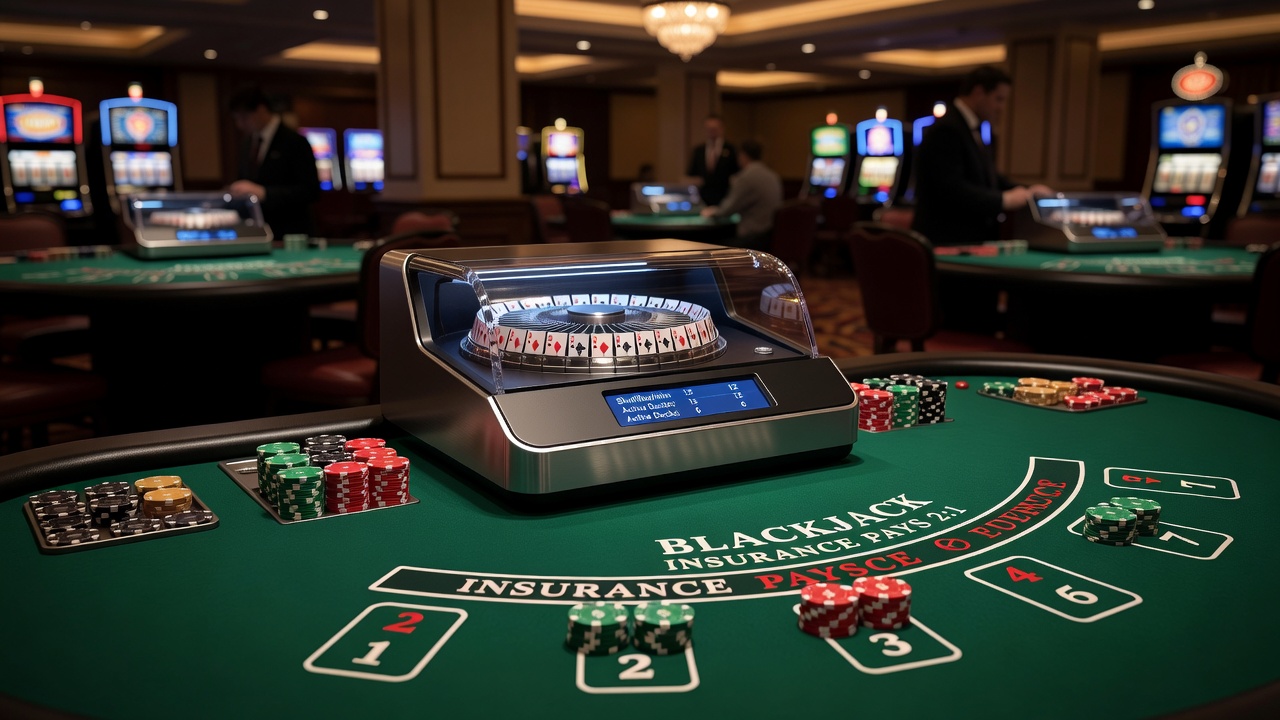
Continuous shuffling machines entered widespread use across multi-deck blackjack tables in regulated markets during the early 2000s, and by August 2026 their presence had altered both the number of hands dealt per hour and the effective penetration achieved before cards returned to the shuffle cycle. These devices pull cards from the discard tray and reinsert them into the active shoe at irregular intervals, which eliminates the traditional pause for a full shuffle while limiting how deeply dealers reach into the remaining deck before the next cycle begins.
Mechanics of Continuous Shuffling in Multi-Deck Games
Multi-deck shoes typically contain six or eight decks in jurisdictions such as Nevada, New Jersey, and several Canadian provinces. When a continuous shuffling machine operates, it draws from the discard pile and randomly redistributes those cards back into the shoe rather than waiting until the cut card appears. This process keeps the shoe composition closer to a random state throughout the round sequence, which directly reduces the window available for tracking specific card values that have already left play.
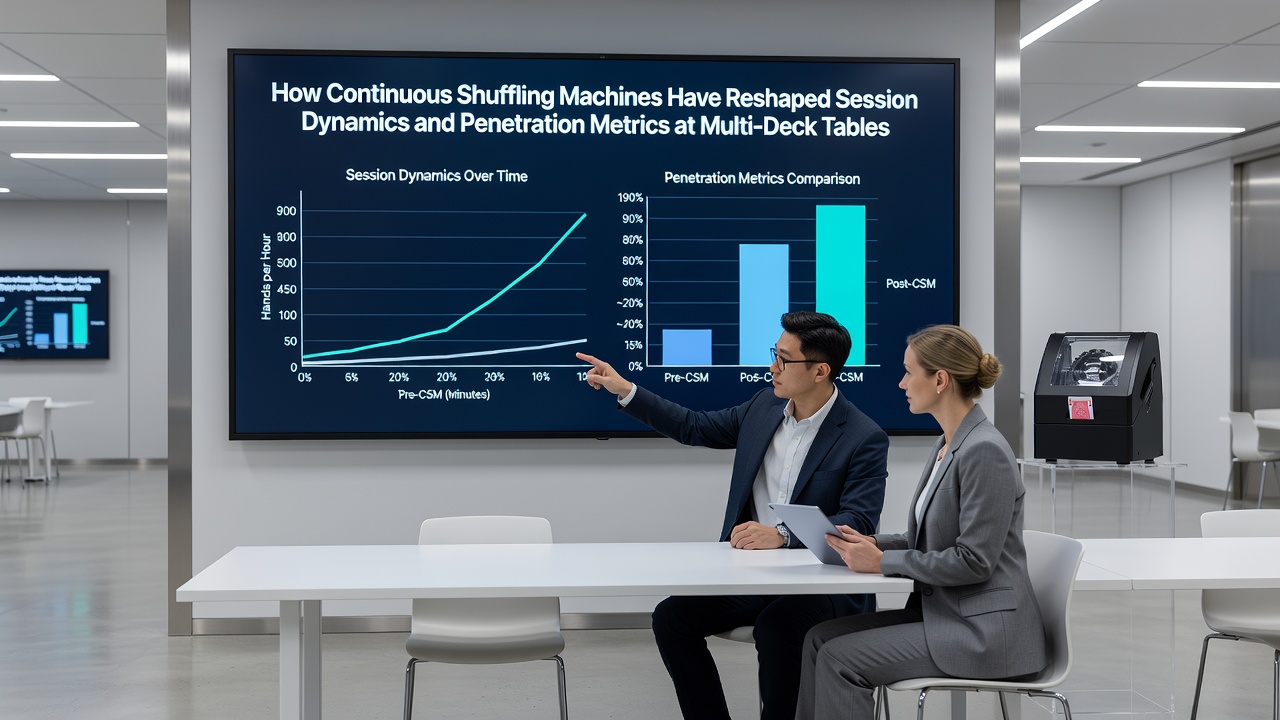
Penetration metrics reflect the percentage of the shoe that gets dealt before the machine begins its next cycle. Data collected by the Nevada Gaming Control Board through 2025 showed average penetration falling from approximately 75 percent in tables using batch shufflers to roughly 55 percent where continuous machines remained active. Similar patterns appeared in reports filed with the Alcohol and Gaming Commission of Ontario, where multi-deck tables equipped with continuous units recorded penetration figures between 50 and 58 percent during the same period.
Impact on Session Dynamics and Hands per Hour
Session length and hands dealt per hour shifted once continuous shuffling machines replaced manual or batch-shuffle procedures. Dealers no longer stop to gather and reshuffle the entire shoe, so tables maintain a steadier pace. Observers at properties in Atlantic City documented an increase from roughly 60 hands per hour to between 80 and 90 hands per hour after continuous units were installed. That higher throughput extends the total number of decisions a player faces during a fixed time at the table, yet the reduced penetration narrows the opportunities for advantage-play techniques that rely on remaining deck composition.
Regulated markets impose specific technical standards on these machines. In New South Wales, the Independent Liquor and Gaming Authority requires continuous units to meet certified randomness thresholds and to undergo periodic testing that confirms the redistribution rate stays within defined parameters. These rules ensure that the machine does not create predictable patterns while still delivering the operational speed that operators seek. As a result, session dynamics remain consistent across shifts, adn floor supervisors can schedule dealer rotations without accounting for extended shuffle breaks.
Penetration Metrics Across Jurisdictions
Penetration statistics vary by jurisdiction because each regulatory body sets its own guidelines for shoe size, cut-card placement, and machine certification. Tables in Macau that operate under the Gaming Inspection and Coordination Bureau typically use eight-deck shoes with continuous shuffling, and penetration rarely exceeds 52 percent once the machine cycles begin. In contrast, certain tribal casinos in the United States that fall under the National Indian Gaming Commission allow operators to choose between continuous and batch units, which produces a wider range of penetration values across properties.
Researchers at the University of Nevada, Reno, examined surveillance data from multiple Nevada properties between 2023 and 2025 and found that continuous shuffling reduced the standard deviation of penetration from 8 percent to under 4 percent. This tighter distribution means players encounter more uniform conditions from one session to the next, which simplifies operational forecasting for casino management while limiting variance that card counters previously exploited.
Regulatory Oversight and Compliance Requirements
Regulators in multiple markets mandate that continuous shuffling machines undergo independent laboratory testing before deployment. The testing evaluates both the randomness of the redistribution algorithm and the physical durability of the mechanism under continuous operation. Once approved, machines remain subject to random field audits that verify ongoing compliance with the original certification standards. These audits occur at intervals set by each jurisdiction, ranging from quarterly reviews in some U.S. states to semi-annual checks in Australian territories.
Operators must also maintain detailed logs that record machine uptime, any interruptions in the shuffle cycle, and the average number of cards returned to the shoe per minute. Gaming control agencies review these logs during routine inspections, and deviations beyond established thresholds trigger additional scrutiny or temporary removal of the unit from service.
Conclusion
Continuous shuffling machines have produced measurable changes in both hands-per-hour rates and penetration percentages at multi-deck blackjack tables across regulated markets. The devices sustain higher throughput by removing shuffle pauses, yet they compress the portion of the shoe that reaches the table before cards re-enter the cycle. Regulatory frameworks in Nevada, Ontario, New South Wales, and other jurisdictions enforce technical standards and reporting requirements that keep these outcomes consistent and auditable. Data collected through August 2026 continues to reflect these structural shifts in table operation and card distribution metrics.