21 Jun 2026
Evolution of Prize Pool Distributions in Blackjack Tournaments Hosted by Major Gaming Operators
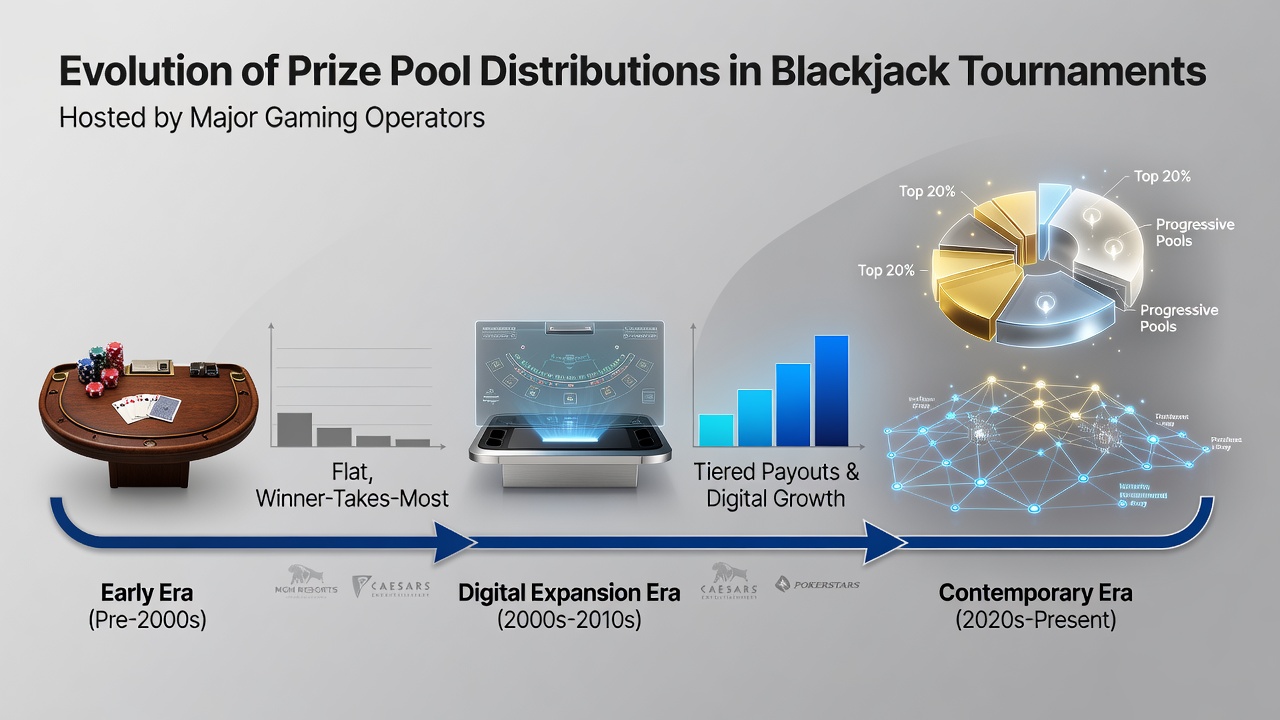
Blackjack tournaments organized by major gaming operators have undergone substantial shifts in how prize pools get assembled and divided among participants, with changes driven by regulatory updates, technological integration, and adjustments in player participation patterns across physical and digital venues.
Early Structures in Tournament Prize Allocation
Operators in the late twentieth century typically relied on entry fees collected directly from players to form prize pools, while a fixed percentage often covered operational costs and house margins, which created straightforward but limited distributions where top finishers claimed the bulk of funds in tiered payouts. Data from regional gaming authorities shows that these models emphasized winner-take-most approaches in many cases, whereas mid-tier placements received smaller shares that reflected the smaller overall pools available at the time.
Those early formats drew from limited participant numbers, and prize guarantees remained rare until operators began experimenting with supplemental contributions to attract broader fields during slower seasons.
Expansion Through Guaranteed Pools and Operator Contributions
Major operators introduced guaranteed minimum prize pools in the early 2000s to stabilize participation rates, which meant casinos added their own funds when entry fees fell short of advertised totals, and this practice expanded rapidly across Las Vegas properties and international resorts alike. Figures from state gaming commissions indicate that guaranteed pools grew from occasional promotions to standard features by the mid-2010s, because they reduced financial risk for players while allowing operators to market events with predictable payout structures.
Distributions evolved to include more graduated payout ladders that rewarded deeper runs rather than solely crowning a single champion, and this adjustment aligned with data showing increased repeat entries when multiple payout positions existed.
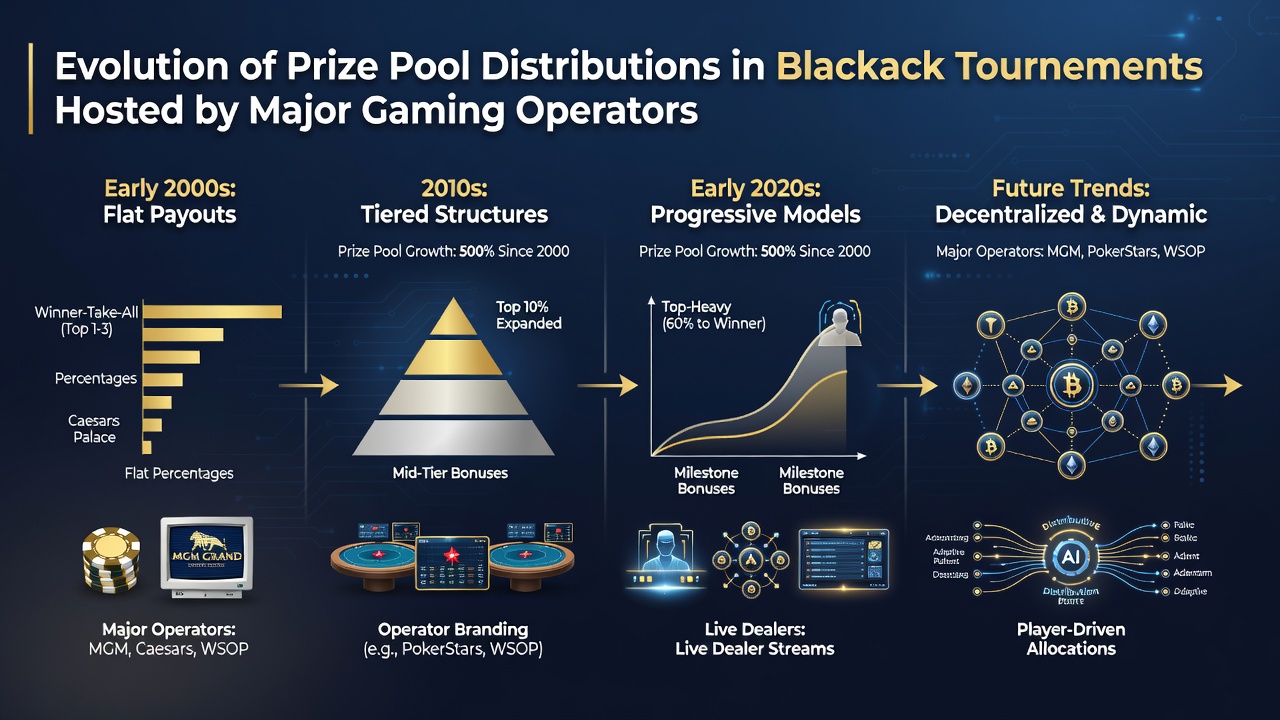
Additional revenue streams such as sponsorships from equipment providers and media partnerships began supplementing traditional entry fees, which expanded total pools without raising individual costs and led to hybrid models where percentages of side bets or rebuys fed directly into progressive jackpot components attached to tournament play.
Impact of Digital Platforms and Regulatory Changes
Online and hybrid tournament formats accelerated further modifications after 2020, since operators integrated live dealer streams with digital overlays that tracked real-time contributions to prize pools, and this transparency allowed participants to monitor how re-entry fees and add-ons accumulated across multiple sessions. Reports compiled by the Nevada Gaming Control Board detail steady increases in average pool sizes for sanctioned events through 2025, with notable acceleration observed in the first half of 2026 as operators adjusted structures ahead of summer schedules.
Regulators in jurisdictions such as New Jersey and several Australian states required clearer disclosures on how operator contributions factor into final distributions, which prompted standardized reporting that separated house-funded guarantees from player-generated amounts and reduced disputes over payout calculations.
Those who've analyzed participation data note that pools incorporating satellite qualifiers from online satellites often reached higher totals because they aggregated smaller buy-ins from wider geographic areas, whereas traditional on-site only events maintained more contained but sometimes more predictable structures.
Current Trends in Distribution Models as of June 2026
By June 2026 operators had refined percentage-based splits that allocate larger shares to final tables while reserving portions for consolation prizes and high-hand bonuses, and this approach appears in schedules released by properties under major corporate umbrellas. Industry analyses from organizations such as the European Gaming and Betting Association highlight how blockchain-verified ledgers now document every contribution to certain tournament pools, which provides verifiable trails that satisfy both regulatory audits and player inquiries.
Multi-stage events frequently divide overall pools across preliminary rounds and grand finals, allowing partial payouts at each checkpoint and thereby sustaining engagement through longer series that span several days or weeks. Data compiled across North American and Asian markets shows consistent growth in total distributed amounts when operators combine blackjack tournaments with concurrent promotions such as loyalty point multipliers that convert into additional prize entries.
Conclusion
The evolution of prize pool distributions reflects ongoing adaptations by major gaming operators to balance player expectations, regulatory requirements, and operational realities, resulting in models that incorporate guarantees, graduated payouts, and diversified funding sources. Continued monitoring by gaming authorities worldwide will likely shape further refinements as participation patterns shift in both physical and digital environments.