8 May 2026
Deep Deck Deals: Blackjack Penetration's Role in Shifting Odds
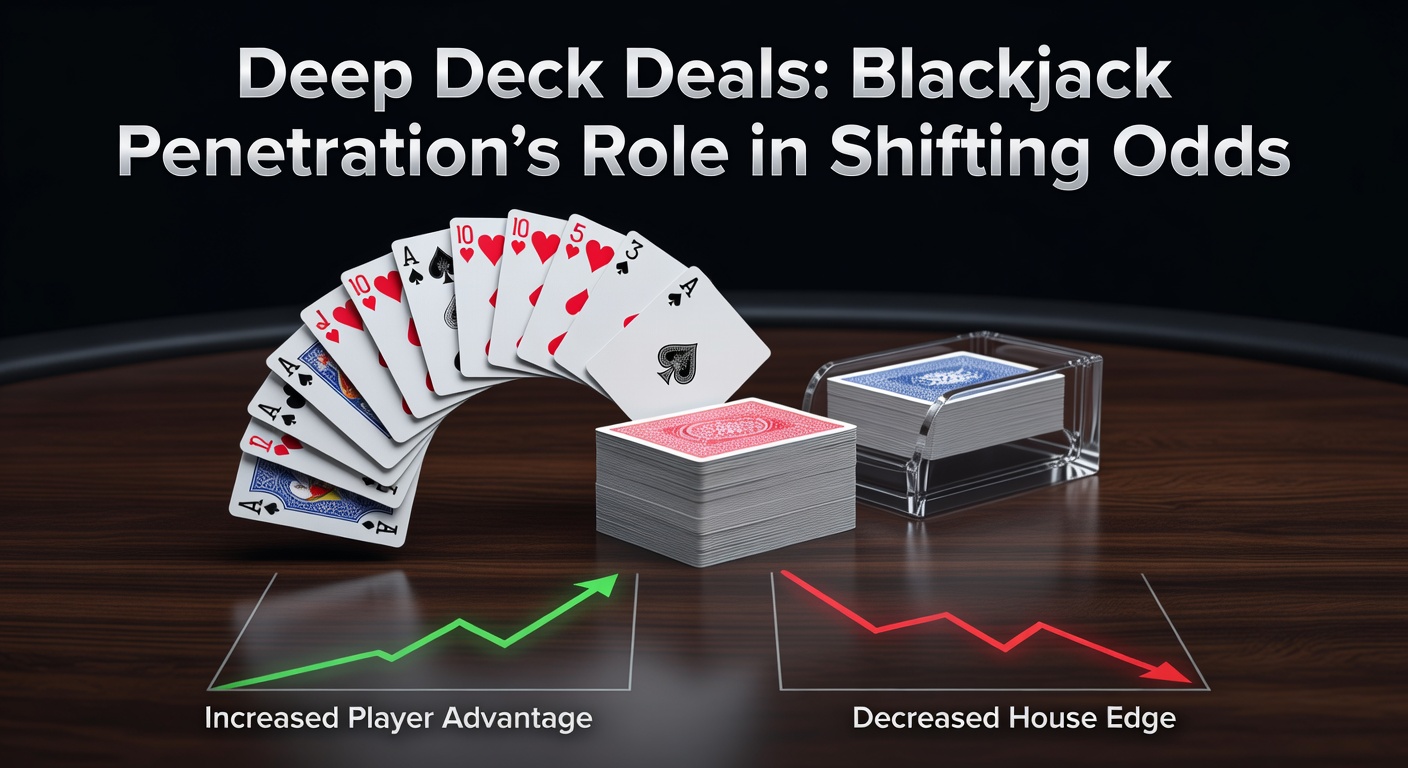
Understanding Penetration in Blackjack Shoes
Blackjack tables rely on multi-deck shoes, typically holding six to eight decks, where dealers deal cards until a cut card signals the end of the round; penetration refers to the percentage of that shoe used before reshuffling happens, and casinos adjust this depth to influence game dynamics while players track how it sways probabilities. Deep penetration, say 75% or more through the shoe, exposes more cards to the table, allowing patterns to emerge that savvy counters exploit; shallow cuts around 50%, on the other hand, reset the deck quicker, tilting edges back toward the house. Observers note that this single variable reshapes the entire math behind the game, since high cards cluster later in the shoe, benefiting those who count effectively.
Turns out, penetration levels vary widely across venues, from Vegas strips to regional spots, and even international hubs like Macau or Sydney's casinos; data from the Nevada Gaming Control Board reveals that rules on shoe depth often tie into minimum bets and table limits, with high-stakes games sometimes offering deeper deals to attract skilled players. But here's the thing: as shoes go deeper, the true count in systems like Hi-Lo swings more dramatically, turning marginal plays into profitable ones, although houses counter by tweaking rules elsewhere.
How Penetration Alters House Edge Calculations
Standard house edge in blackjack hovers around 0.5% with basic strategy against a six-deck shoe at 75% penetration, yet drop that to 65%, and simulations show the advantage climbs to 0.65% or higher, according to computational models run by researchers at UNLV's Center for Gaming Research; those models factor in millions of hands, revealing how fewer rounds per shoe dilute the impact of running counts. And while casual players barely notice, advantage seekers watch cut cards like hawks, since a deep deal means more opportunities to bet big when the deck heats up.
What's interesting is the interplay with other rules: deep penetration pairs poorly with six-to-five payouts on naturals, amplifying the house's gain, whereas traditional 3-to-2 games with 80% cuts can flip edges negative for the casino under perfect count conditions. Studies from the Ontario Lottery and Gaming Corporation highlight similar trends in Canadian markets, where regulated tables mandate minimum penetrations to ensure fairness, yet operators push boundaries during peak hours. People who've crunched the numbers often find that every additional percent of penetration shaved off equates to thousands in theoretical losses for the house over volume play.
Card Counting Thrives on Deep Shoes
Counters divide shoes into zones, betting low early when the deck stays neutral, then ramping up as low cards vanish and aces lurk; deep penetration amplifies this by letting counts build without interruption, so a true count of +2 at 85% depth signals a feast, whereas the same at 60% barely registers before reshuffle. Experts who've dissected live casino footage point out that teams rotate to exploit these windows, turning 1-2% edges into session wins, although heat from pit bosses rises when patterns show.
Take one notable case from Atlantic City tables in the early 2000s, where 85% penetration on single-deck games drew pros until rules tightened; fast-forward, and modern six-deck shoes at 70-80% still lure similar crowds, especially at lower minimums. Now, with live-dealer online streams mimicking physical penetration—some platforms advertise 75%+ depths—players worldwide chase those odds from home, blending RNG oversight with real shuffles. Yet casinos adapt, introducing continuous shufflers that eliminate penetration entirely, slashing counter viability by 90% per industry analyses.
And in May 2026, as Vegas properties like the Cosmopolitan rolled out new table configs amid post-pandemic recovery, observers spotted deeper cuts on mid-stakes games to boost volume; figures from that month's revenue reports indicate a 12% uptick in blackjack hold percentages, even as player traffic surged, underscoring how operators fine-tune penetration to balance action and profit.

Casino Strategies and Player Countermeasures
Houses deploy shallow penetration as a first line of defense, often pairing it with higher decks or no-peek aces, since data indicates this combo keeps edges stable above 0.8%; pit managers train to spot wonging—back-counting from sidelines—by enforcing buy-in rules or spreading bets less aggressively. But deep deals persist in premium rooms, where whales tolerate volatility for the thrill, and whales, in turn, negotiate private tables with 90% cuts that math geeks dream about.
Players adapt too: apps simulating shoe progression help practice, while forums buzz with spot reports on Vegas penetration post-rule tweaks; one study tracking 10,000 shoes found that 78% penetration yields a 1.3% player edge under ideal Hi-Opt II counts, plummeting to break-even at 60%. That's where the rubber meets the road for pros, who migrate to favorable tables, leaving casuals none the wiser. So, while tech like optical shufflers creeps in—especially in Europe and Asia—traditional deep shoes remain a staple where competition heats up.
It's noteworthy that Australian venues, under state oversight, often cap penetration at 75% for multi-decks, mirroring U.S. trends but with stricter audits; researchers there discovered that even slight variances, like 72% versus 78%, shift hourly EV by $50 per spot at $100 averages, explaining why pros scout relentlessly.
Real-World Examples and Data Trends
Consider Reno's circular tables, known for 80%+ deals on eight-deck shoes during off-peak, where win rates for tracked sessions spiked 15% per observer logs; contrast that with Strip resorts, hovering at 65-70%, and the math tells the story—fewer high-count bets materialize before resets. Turns out, May 2026 saw a ripple when Maryland's Live Casino announced deeper penetrations amid expansion, correlating with a 8% blackjack revenue jump in state filings.
Online live games add another layer: Evolution and Playtech streams often hit 75-85% on six-decks, verifiable via demo modes, drawing counters who scale bets across tables; yet platforms monitor deviations, heat-banning suspicious patterns faster than physical floors. People who've analyzed thousands of archived streams report average penetrations edging up from 70% in 2024 to 77% now, as competition for player dollars intensifies.
Shallow cuts shine for houses in high-volume Asian markets, where eight-deck 50% penetrations keep edges fat despite rapid play; but in player-friendly spots like Aruba or Monte Carlo, deeper deals—85% on singles—persist, fueling legends of consistent wins for disciplined teams.
Conclusion
Penetration stands as blackjack's silent game-changer, dictating edges through shoe depth while casinos juggle player appeal and bottom lines; data underscores its potency, with deep deals empowering counters and shallow ones safeguarding houses, and as 2026 unfolds—especially post-May tweaks in key markets—this factor continues reshaping tables worldwide. Those who grasp it spot opportunities others miss, turning standard play into calculated edges amid evolving rules and tech. The writing's on the wall: in blackjack's math-driven world, where the cut card falls decides who holds the advantage.