21 Jul 2026
Dealer Rotation Schedules Shape Game Pace Variations in High-Volume Gaming Environments
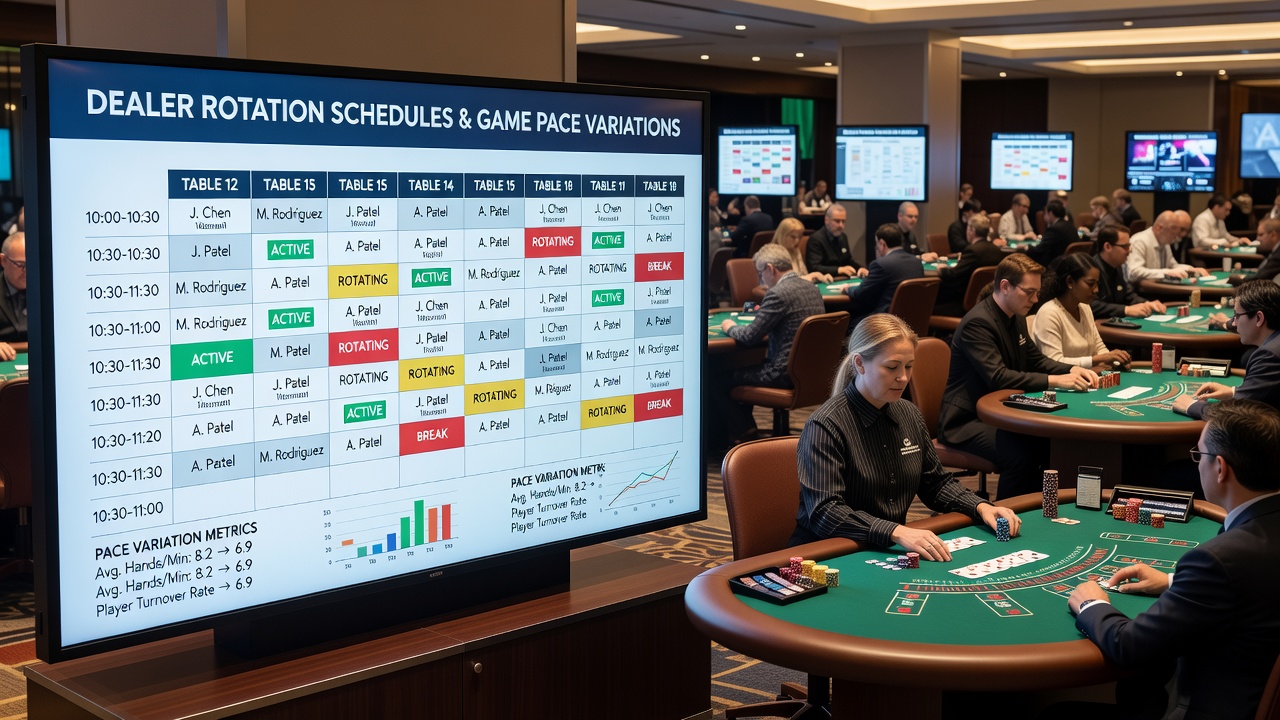
High-volume gaming environments rely on structured dealer rotation schedules to maintain operational flow across tables that often run 24 hours a day, and these schedules directly influence how quickly hands progress, how breaks disrupt momentum, and how staff transitions affect overall table speed. Observers note that casinos in major markets adjust rotation intervals based on traffic patterns, with peak periods requiring shorter cycles to prevent fatigue while slower times allow extended dealer stints that keep games moving without interruption.
Standard Rotation Patterns Across Major Markets
Data from regulatory filings shows that many North American properties implement 20 to 30 minute rotation blocks for blackjack and roulette dealers during busy shifts, a practice that balances dealer endurance with continuous game availability. In contrast, facilities in Asia often extend rotations to 45 or 60 minutes because local labor regulations and staffing models differ, which produces measurable differences in hand-per-hour rates when compared to U.S. venues. Those who've tracked table performance across jurisdictions report that shorter U.S. cycles create brief pauses during dealer changes yet sustain steadier overall pace because fresh dealers maintain consistent dealing speed.
Impact on Hand Speed and Player Throughput
Studies of casino operations indicate that each dealer rotation introduces a 15 to 45 second window where play pauses for the incoming dealer to verify chip counts, clear the layout, and receive the shoe or deck. In high-volume settings this accumulates across dozens of tables, creating cumulative effects on daily hands dealt. Figures from Nevada properties reveal that tables operating under 20-minute rotations average 5 to 8 percent fewer hands per hour than those using 40-minute blocks, primarily because transition frequency rises. Yet the same data shows dealer accuracy improves with frequent changes, reducing disputes that otherwise halt games for extended reviews.
Regional Regulatory Influences on Scheduling
The Nevada Gaming Control Board sets minimum staffing and break requirements that shape how rotations occur on the floor, while Australia's state gaming authorities impose different fatigue-management rules that extend continuous dealing time before mandatory relief. These variations produce distinct pace signatures: American tables often experience more micro-pauses yet recover faster due to overlapping relief dealer positioning, whereas Australian operations maintain longer uninterrupted stretches interrupted by fewer but longer transitions. Observers tracking both systems note that the resulting hand-per-hour metrics diverge most noticeably during July periods when tourist influxes push tables to maximum capacity in both regions.

Technology Integration and Real-Time Adjustments
Modern casino management systems now track dealer performance metrics in real time, allowing floor supervisors to shorten or lengthen rotations based on live data rather than fixed schedules. Reports from Singapore's integrated resorts show that algorithmic scheduling reduced average transition delays by nearly 12 seconds per change during high-traffic evenings in early 2026. Such systems also flag when a particular dealer consistently speeds up or slows down a table, enabling targeted reassignments that stabilize pace across sections of the pit. Those monitoring these tools report fewer instances of tables falling behind during peak windows because rotations adapt dynamically instead of following rigid clocks.
Staffing Models and Their Pace Consequences
High-volume environments maintain relief dealer pools sized to cover simultaneous rotations across multiple pits, and the size of these pools determines whether transitions occur seamlessly or create bottlenecks. Properties with lean relief staffing experience clustered pauses when several dealers reach rotation limits at once, while those with larger pools stagger changes to keep most tables active. Research from industry operations groups indicates that staggered models preserve 3 to 5 percent higher throughput during rush periods, though they require more precise coordination from pit bosses who monitor multiple tables simultaneously.
Conclusion
Dealer rotation schedules function as a core operational lever in high-volume gaming environments, directly modulating hand speed, transition frequency, and overall table throughput through their length, flexibility, and coordination with relief staffing. Regulatory frameworks in different jurisdictions establish baseline constraints that produce measurable pace differences, while emerging technology allows finer adjustments that respond to real-time conditions. Data collected through 2026 continues to demonstrate that these scheduling choices accumulate into significant daily and monthly variations in game volume across major markets.