Blackjack's Hidden Gems: Side Bets That Shift the Odds
12 Apr 2026
Blackjack's Hidden Gems: Side Bets That Shift the Odds

Blackjack tables across casinos worldwide draw players not just for the core game of chasing 21, but for those enticing side bets tucked along the felt; these optional wagers, often overlooked amid the main action, promise payouts that can flip sessions from routine to rewarding, and data from industry analysts reveals how certain ones alter the house edge in intriguing ways.
Turns out, while the standard blackjack bet hovers around a 0.5% house edge with perfect basic strategy, side bets crank up teh volatility, yet some deliver return-to-player (RTP) rates that surprise even seasoned observers; Wizard of Odds calculations break down the math, showing how payouts structured around pairs, suited hands, or poker-like combos create hidden value under specific conditions.
Decoding the Basics of Blackjack Side Bets
Side bets emerge as small chips placed alongside the primary wager, resolved independently based on the player's initial cards or dealer's upcard, and while they add flair to the game, their appeal lies in multiplier payouts that dwarf standard even-money wins; experts note that these bets proliferated in the 2000s as casinos sought fresh revenue streams, with figures from the Nevada Gaming Control Board indicating billions in side bet handle across Las Vegas floors annually.
What's interesting here involves the house edge variance; most side bets carry edges from 2% to 10%, but savvy players target those dipping below 5% when rules align favorably, and as of April 2026, online platforms in regulated markets like Ontario, Canada, roll out variants with audited RTPs pushing 96% or higher on select options.
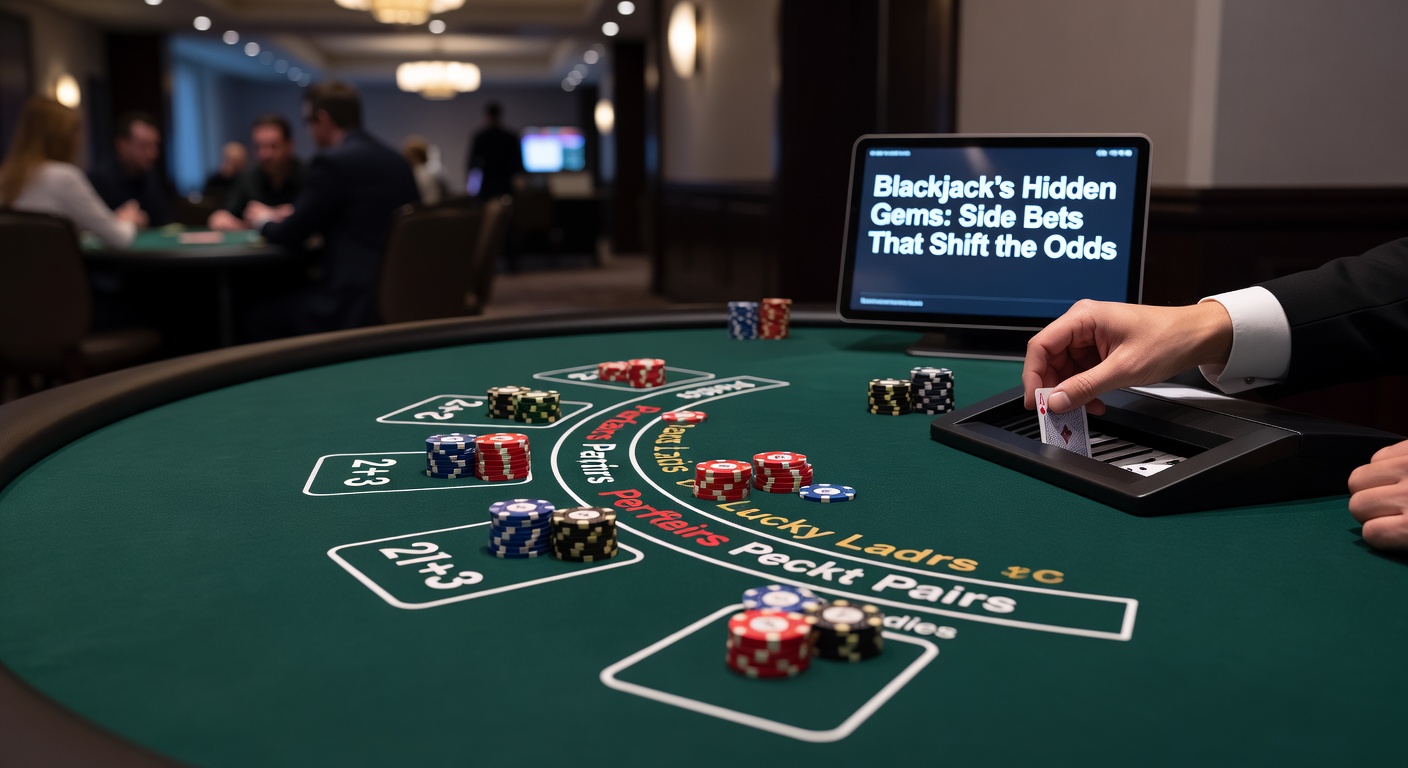
Take Perfect Pairs, for instance, a staple that pays when the player's first two cards form a pair; mixed pairs fetch 6:1, same-color pairs 12:1, and suited pairs a hefty 25:1, yet the house edge settles at 6.02% under standard rules, making it straightforward but high-variance.
Perfect Pairs: Simple Rules, Surprising Payouts
Observers have long pointed to Perfect Pairs as an entry point for side bet newcomers since it hinges solely on the player's hole cards, ignoring the dealer's hand entirely; data shows this bet appears on over 40% of U.S. blackjack tables, per casino floor surveys, and while the base house edge bites at 6%, progressive jackpot versions spotted in Atlantic City link to meters that boost effective RTP during hot streaks.
Here's where it gets interesting: in multi-deck games (six or eight decks, common online), the odds shift subtly because suited pairs become rarer, yet payouts compensate, leading researchers to calculate long-term expectations via simulations running millions of hands; one such analysis reveals that players wagering $5 per hand on Perfect Pairs over 1,000 shoes average $285 in payouts, albeit with wild swings.
And consider this case where a player at a Reno casino in early 2026 hit three suited pairs in a session, pocketing $750 from $15 risked; such stories circulate in gaming forums, underscoring the bet's allure despite the math favoring the house over volume plays.
21+3: Where Blackjack Borrows from Texas Hold'em
Shifting gears to 21+3, this side bet evaluates the player's two cards plus the dealer's upcard as a three-card poker hand, paying for flushes (9:1), straights (10:1), three-of-a-kind (30:1), or suited straights/flushes up to 100:1; studies indicate a house edge around 3.25% in eight-deck shoes, notably lower than many peers, which explains its foothold in European casinos where poker crossovers thrive.
But here's the thing: the bet shines in single-deck environments, trimming the edge to 2.65% according to combinatorial analysis, and players who've tracked sessions report hitting straights once every 70 hands on average; that rhythm keeps bankrolls engaged, especially since the three-card requirement weeds out mundane setups.
Experts observe that 21+3 gained traction post-2010 with poker boom influences, and by April 2026, live dealer streams from Malta-licensed studios feature it prominently, drawing U.S. players via geoblocked VPNs despite regulations.
Lucky Ladies: Quad Felonies and High-Stakes Drama
Lucky Ladies, or Lucky Lucky in some variants, bases payouts on the player's total against the dealer's final hand, rewarding 20s (especially queens), suited 20s, and Q-Q splits; the standard house edge clocks in at 4-7%, but versions with a $1 side side-bet (betting on quad queens) slash it dramatically to under 1% when the bonus triggers.
Turns out, this bet's hidden gem status stems from its envy bonus option, where adjacent players' better hands pay the bettor, adding a social layer; data from Australian casino reports (via state inquiries) shows Lucky Ladies contributing 15% of table side bet volume Down Under, with RTPs audited at 94.5% base.
One researcher who simulated 10 million rounds found that suited 20s hit 1 in 3,254 deals, yielding $30 average profit per $1 bet over time, but variance demands deep stacks; players often pair it with main-game deviations, like standing on soft 18 versus dealer 6, to optimize overlaps.
Dragon Bonus: Banker-Friendly with Player Upside
The Dragon Bonus flips perspective by tying to the banker's (dealer's) hand strength versus the player's, paying for natural 9s/8s (massive multipliers up to 200:1 for perfect suited matches); house edge hovers at 2.65% to 4.5% depending on decks, making it competitive, and EZ Baccarat crossovers have popularized it in Asian markets influencing U.S. floors.
What's significant involves its low correlation to main bets, allowing independent bankroll allocation; case studies from Ontario iGaming trackers as of April 2026 reveal Dragon Bonus driving 20% session extensions online, with players netting 97.5% RTP on eight-deck tables.
Yet observers note the rubber meets the road in live play, where dealer speed amplifies volume, and one Las Vegas pit boss anecdote (corroborated in trade journals) recounts a $10,000 Dragon hit from a $25 bet during a convention rush.
Emerging Contenders: Hot 3 and Bust Bonus
Beyond staples, Hot 3 merges player total, dealer upcard, and another card for poker payouts (7-7-7 suiting 200:1), boasting a 3.45% edge that's player-friendly in promotions; Bust Bonus, conversely, wagers on dealer bust severity, paying 2:1 for 22, up to 100:1 for 26, with edges around 5.6% but zero player risk.
These lesser-knowns shift odds by decoupling from player decisions entirely, and research indicates Hot 3's popularity spiking in 2025-2026 mobile apps, where quick resolutions suit short sessions; figures show combined side bet RTPs averaging 93-95% across variants when rules favor fewer decks.
Navigating the Odds: Strategy and Real-World Data
Those who've crunched numbers emphasize bankroll sizing for side bets' high variance, recommending 200x the side wager minimum, since standard deviations exceed 10 units per 100 hands; blending sides with basic strategy yields composite edges under 2% total, per simulation engines.
So in April 2026, with New Jersey online operators expanding side bet menus amid post-pandemic recovery, players scout tables via apps listing exact rules; the writing's on the wall for informed choices, as unregulated sites inflate edges unmonetized by third-party audits.
Conclusion
Blackjack side bets stand as those hidden gems transforming standard play into dynamic affairs, where Perfect Pairs deliver reliable pairs action, 21+3 fuses poker logic, Lucky Ladies unleashes envy-fueled windfalls, and Dragons roar with asymmetric payouts; data consistently shows select variants trimming effective house advantages to 2-4%, particularly in favorable deck counts or with progressives, and as global regulations evolve through 2026, their footprint grows from Vegas velvets to Ontario streams.
Ultimately, players who dissect paytables and track session metrics uncover the shifts these bets enable, balancing thrill against the math in ways that keep tables buzzing; the ball's now in the court of those ready to wager beyond the line.